If You Control Attention, You Control the Future.
Who controls yours?
Back in the 1950s, the personal development guru Earl Nightingale made a simple but astute observation: "We become what we think about."¹ How could we be anything else? Of course, our life experience and personal disposition are important factors, but how that experience is digested and our innate disposition is expressed depends hugely on where we direct our attention and the content we consume.
Nightingale's observation is an important one—but think about it at scale. Isn't it true that what a society thinks about is what it becomes?
If this is true, and it must be: what are we becoming?
Today, it is common, and above all convenient, to blame our digital environment—social platforms, influencer culture, algorithmically curated feeds—for the narrowing of opinion and belief, for the social and political divide we are experiencing today. But there are two other factors worth noting.
The first is that in the U.S., the origins of our current social and political divide began in 1987—not as many assume, with the introduction of the smartphone, but with the repeal of what is commonly referred to as the "Fairness Doctrine." The doctrine basically said this: if you held a broadcast license, you owed something to the public in return.
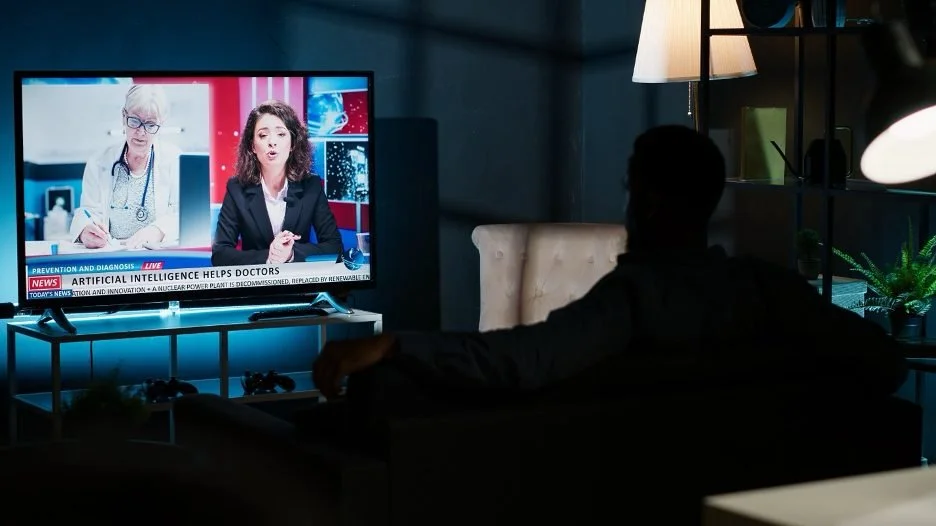
It's hard to believe now, but in the late eighties there were only a handful of channels—the three major networks (ABC, CBS, and NBC), the upstart Fox, a PBS station, and maybe a few independent locals. Cable was relatively new and offered only a few dozen channels, and only about half of American homes had cable at all. The doctrine applied to radio too. Functionally, the public conversation and debate ran through a small number of gatekeepers, and the doctrine existed to keep those gatekeepers honest and their commentary balanced.
Established by the FCC in 1949, it required broadcasters to do two things. First, they had to devote airtime to controversial issues of public importance—they couldn't simply ignore the hard questions of the day. Second, and more consequentially, they had to present those issues fairly, giving honest airtime to opposing views. If a station aired an attack on a public figure, it was obligated to offer that person a chance to respond. And broadcasters had to do this at their own expense and on their own initiative, whether or not a sponsor could be found to foot the bill.
Then, in 1987, the FCC repealed it. The Reagan-era commission argued that the doctrine no longer served the public interest and in fact violated the free speech rights it was meant to protect—that with cable and an expanding media landscape, the scarcity rationale no longer held. Congress tried to write the doctrine into law to preserve it, but Reagan vetoed the bill, and there weren't enough votes to override him.
What keeps things balanced now?
The effect was almost immediate. Freed from any obligation to balance, broadcasters discovered that one-sided, emotionally charged programming was far more profitable than measured, two-sided coverage. Talk radio exploded. Rush Limbaugh's bombastic, take-no-prisoners style set the template, and an entire ecosystem of partisan media followed—each outlet free to feed its audience a single, choreographed, and selectively challenged perspective. The marketplace had quietly replaced the mandate, as profit replaced perspective.
Which brings me to the second factor. The elimination of the Fairness Doctrine didn't just change what broadcasters were allowed to do—it changed what was required of us. It made each of us a curator of the content we consumed. The responsibility that had once belonged to the gatekeepers quickly shifted onto the individual. If we wanted "fair and balanced," we would now have to actively pursue it. The irony writes itself: when Roger Ailes launched the Fox News network in 1996, he chose the slogan "Fair & Balanced."²
The challenge with this arrangement, of course, is that few of us care to seek out an opinion or perspective we don't agree with. It's unpleasant—and much easier to scroll social feeds, respond to alerts and notifications, or tune in to a self-affirming podcast. Life is stressful enough without inviting in something that argues with us.
But do we really choose?
There is no doubt that social media platforms are a massive contributor to the societal and political divisions we are experiencing today—their ability not just to monitor us, but increasingly to know us. Sophisticated algorithms now produce the functional equivalent of an attention aphrodisiac, so enticing that it becomes virtually impossible to look away.
Make no mistake: these digital enticements didn't start the communications fire—that blaze was set alight decades earlier. They fed it our attention.
I began with a claim: if you control attention, you control the future. So we must all ask ourselves: What am I paying attention to? Does it represent who I want to become, the community I want to live in, and the future I want to create? If not, then something needs to change.
In my last post, I described what I called Ultra-Processed Communication—content stripped of genuine informational value: mental calories without the nutrition. Like the ultra-processed food it's named for, it fills us, even makes us feel good in the moment, but at the expense of our long-term well-being. Both are tempting. Both are convenient. And both, consumed regularly, lead to something we don't want to become, in a place we don't want to be.
The good news is that while our attention is being monitored, directed, even coerced—it still belongs to us. I am not saying reclaiming our attention will be easy. Like reclaiming our health, it requires conscious effort and daily discipline. What I am saying is that our choices have consequences. Be deliberate. It matters. It’s worth it.
Seek deliberately, and you become deliberately. That is the Seeker's Mindset.
Notes:
¹ Earl Nightingale, The Strangest Secret (Herndon, VA: BN Publishing, 2006) 28.
² Gabriel Sherman, “Fox News Is Dropping Its ‘Fair & Balanced’ Slogan,” New York Magazine, June 14, 2017.