What Am I to That?
Charting a course through the fog of change.
Only two things are certain these days (besides death and taxes, of course): everything is changing, everywhere, all at once. And everyone is looking for stability amid the flux. The challenge is that most are looking for it in the wrong place.
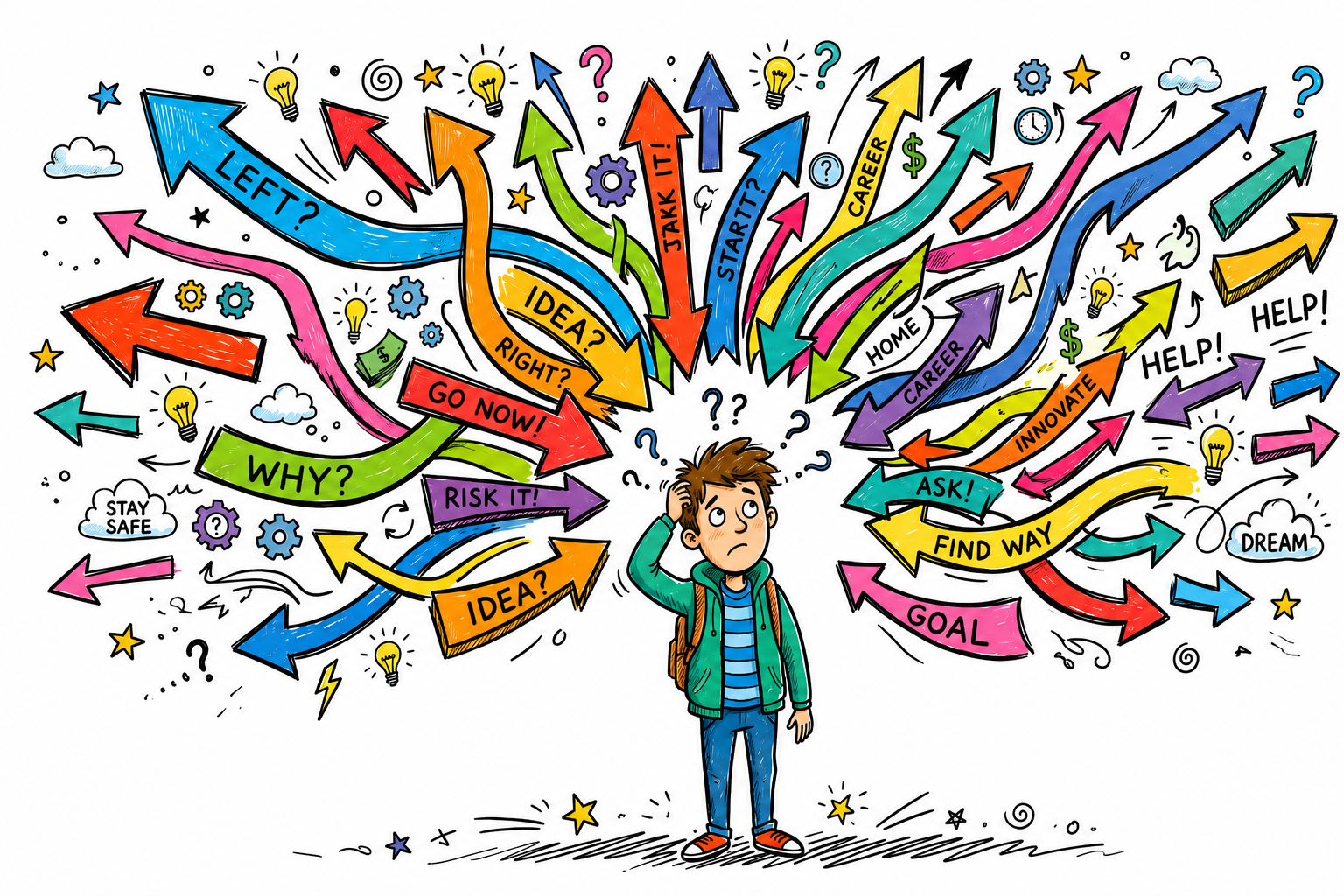
In calmer times, when one of the things that steady us comes loose, the others hold. A new system gets deployed at work, and we collaborate with coworkers. We lose a job, and we lean on our network. A relationship ends, and we call on friends and family. But where do we look when we're surrounded by change—and worse, when everyone we know is too?
Within.
This isn't Zen philosophy. It's a practical response to our current reality.
Think about it. If we try to make sense of, categorize, and prioritize all the change around us, it's maddening. The scene is like an assembly-line worker trying to keep pace with a conveyor belt that keeps accelerating. Chaos ensues, things break, and the work itself becomes indistinguishable from the chaos it was meant to manage.
So I recommend flipping the script. The instinctive question—the one that often distracts us from meaning and identity—is What is all this? We look at the change and demand it explain itself: What is that? But that question keeps me in the chaos, sorting it, ranking it, trying to make it hold still. So I ask a different one—about myself rather than the chaos:
What am I to that?
To that circumstance. To that change. To that action. It's a powerful prompt—one that pulls me out of the current of the moment and widens my perspective. It brings me back to awareness and reminds me that I get to choose who I am and what I stand for. It clarifies how I relate to my environment and the forces moving through it, and helps me find solid ground in my values and identity. And it holds me accountable—for how I respond, for what I contribute, and for what I choose to do next. It makes each decision a statement. Not a reaction.
It's a small pivot in mindset with a large effect. The first question splinters my control and weakens my authority within the flux. The second places me in command. The question—and the reflection it prompts—stops me from trying to organize a world that won't hold still. Instead, it forces me to decide who I am, not what it is.
Because when all is said and done—when the day is finished, or a life complete—we are all accountable to ourselves: for the actions we took, and the fingerprints we leave on the future.
This is what it means to hold a Seeker's Mindset: in a world where everything is moving all at once, the only thing we can hold stable is who we are in the face of it. The question is always the same—what am I to that?