The Worst Advice
The hard work was never the cost. It was the point.
"Never do anything that you can pay someone else to do."
That advice came early in my career, from the general manager of an insurance firm I'd just signed on with. I was young and new to the business. He was 20 years my senior and clearly "successful," so I took it to heart.
It took me years to understand how bad that advice was. Part of it was the self-interest that drove his guidance: I worked on straight commission, and he got paid when I kept my attention on one thing: making sales. But the deeper problem was that the philosophy squeezes the joy, and the reward, out of life. You can pay someone to mow your lawn. But if you love the smell of cut grass and being outside, are you really better off paying someone else to do the thing you enjoy?
The memory of his advice came back to me when I saw a headline in The Atlantic: "Why Do Something That a Machine Can Do for You?"¹
We live in an increasingly technical world, but we are still having a deeply human experience.
Contrary to popular lore, tech bros and marketing narratives, that experience isn't derived from how much we get done, or how fast we do it, how much "more productive" we are. Our experience — good or bad, energizing or depleting — is a product of how we feel about what we've accomplished. Are we satisfied, even proud? Did we learn something, or do something new? Did we end the day with a sense of accomplishment? Or did we do the equivalent of watching someone mow our lawn?
Think about it. When you recount a story from your past, which one do you tell? Is it the one where you sat by the pool all day, basking in the glory of watching the lawn crew work? Unlikely. Odds are the story you share with friends, co-workers or a seatmate on a plane involved struggle or adversity, a time when you were challenged, persevered and reaped the byproducts: personal growth, self-assurance and pride.
Paying someone — or something — to do a thing for you, even a hard thing, can be outsourcing experience. Life experience.
Choosing what to hand over
I'm not saying technology, specifically AI, is bad. It can be a gift. It can take the drudgery out of repetitive, monotonous work. It can let us hand off what we don't enjoy so we can invest more of ourselves in what fulfills us. I like writing, exploring the caverns of a complex idea, even when it frustrates the hell out of me. What I'm saying is that we should choose carefully what we hand over.

Hard, complex, slow, even maddening — none of that is bad in itself. And that's my point. No one else gets to tell us what effort is worthy of our time or what we stand to gain or lose by staying in the struggle. Only we decide that.
A moment ago I said I like writing. That's not quite true. What I love is the result, the sense of having created something. What I crave is wandering into the crevice of an idea and feeling it not only open, but illuminate without warning, into something new and unexpected. Writing is just the effort the reward requires. And the irony is that the harder the work, the greater the reward.
The leadership lesson
We hear every day now that AI is automating the work — reading X-rays, writing code — and that hospitals and tech firms are rewriting job descriptions and thinning their ranks. The story we're sold always has the same shape: the AI will read the scans and the radiologist will review them; the AI will write the code and the senior engineer will check it. But you have to ask: Did those radiologists and engineers become experts in their fields in order to become auditors by another name? Or is their expertise derived from enjoying the work?
And here's the part the story leaves out. They became experts by doing the hard work, not by reviewing it. The judgment these organizations depend on is what experience and struggle left behind. So when leadership hands the hard work to the machine, they do more than unplug the process that made these experts, and the one that would make their replacements. They strip out the satisfaction too. The reward that came from doing the hard thing, and maybe the thing that kept these people showing up in the first place.
So what happens over the long run, to quality and to the person on the receiving end — patient, client, or customer — when an organization trades away its people's morale and hollows out its own bench in the name of efficiency and profit?
At first, nothing bad. That's the trap. Like the bad advice I was handed, an efficiency-first ethos takes time to show its consequences. The machine handles the routine work, and the veterans, still sharp from the years before they were reduced to quality control, flag mistakes and in doing so train their own replacements. The numbers improve. Morale declines. Consequences arrive.
That's why Ford needed to rehire about 350 veteran engineers after its AI quality push fell short.² And Ford isn't alone. Klarna swapped some 700 customer-service agents for AI, saved millions, watched customer satisfaction slide, then went back to hiring humans, its own CEO conceding that people would rather talk to a person.³ Surveys now find a majority of the executives who cut jobs for AI already regret it. Ford and Klarna are just the ones that made the news.
Today, individuals and organizations alike are advised, directed, even expected to make choices that mirror the terrible advice I was given years ago: Don't do anything that technology can do for you. When we're told it's a technical decision and the way of the future, it's easy to forget that the consequences are human, and that the future is ours.
A Seeker's Mindset is rooted in pragdealism (Pragmatic Idealism): embracing what works while pursuing what ought to be. An ideal that improves our life experience and, at its best, the human condition. It welcomes the best technology has to offer, but does not surrender the best of ourselves and the richness of our life experience.
Choose deliberately. Choose wisely. The experience is yours.
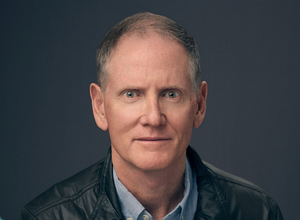
This essay is adapted from Rick Thomas's forthcoming book, Seeker's Mindset: Defining Identity and Purpose in an Age of Change.
Notes:
¹ Julie Beck and Natalie Brennan, “Why Learn Something That a Machine Can Do for You?,” The Atlantic, August 17, 2026, https://www.theatlantic.com/podcasts/2026/08/why-learn-something-that-a-machine-can-do-for-you/688266/.
² Joe Toscano, “Ford Hiring 350 Engineers After AI Failed Shows Human Value in AI Era,” Forbes, June 30, 2026, https://www.forbes.com/sites/joetoscano1/2026/06/30/ford-hiring-350-engineers-after-ai-failed-shows-human-value-in-ai-era/; Keith Naughton, “Ford’s AI Hiccups Lead Carmaker to Rehire ‘Gray Beard’ Engineers,” Bloomberg, June 25, 2026, https://www.bloomberg.com/news/articles/2026-06-25/ford-has-been-rehiring-quality-inspectors-after-ai-fell-short; Alina Maria Stan, “Ford Had to Rehire 350 Engineers After Its AI Got Vehicle Quality Wrong,” The Next Web, June 26, 2026, https://thenextweb.com/news/ford-rehired-350-engineers-ai-quality-jd-power.
³ Gene Marks, “Business Tech News: Klarna Reverses on AI, Says Customers Like Talking to People,” Forbes, May 18, 2025, https://www.forbes.com/sites/quickerbettertech/2025/05/18/business-tech-news-klarna-reverses-on-ai-says-customers-like-talking-to-people/; Justina Lee, “Employers Who Laid Off Workers Citing AI Are Already Starting to Regret It,” CNBC, July 1, 2026, https://www.cnbc.com/2026/07/01/employers-who-laid-off-workers-for-ai-are-reversing-their-decisions.html.