The Worry We Choose
We ignored what was certain. We fear what isn't.
I've always been fascinated by the choices people make — why we do what we do.
In this case, how do we choose what to worry about?
It's a choice, you know.
Here's what I mean.
The Certainty We Ignored
Thirty-five years ago, I took a climate change class while working on a degree in conservation biology. The class was unusual. The curriculum required one thing: reading and discussing peer-reviewed papers from all sides of the debate, though back then we called it global warming. It did not take long to see where consensus landed. The great majority of the research, much of it built on early "supercomputer" models, showed a link between human activity and the harm it was doing to our environment — and, by extension, to us. In fact, papers that took the opposite view were few, and many of them were funded by the fossil-fuel industry and special-interest groups.
Over the years, the vast majority of the scientific community has been unwavering in its conviction about the causes and the likely consequences. When I sat in that classroom, the direction was already unmistakable in the research I was reading. Today, agreement is as close to unanimous as science ever gets.
Fast forward thirty-five years, and we are seeing what the climate models forecast: record-breaking temperatures, fires, flooding, and drought.
Understandably, these events are finally making the headlines; people are becoming increasingly concerned. Not because the science got more certain — it was always hard to deny. It's because the change is lapping at the door, taking homes, towns, and seasons we thought we could count on. The news shifted from "change is coming" to "change has arrived."
The Uncertainty We Fear
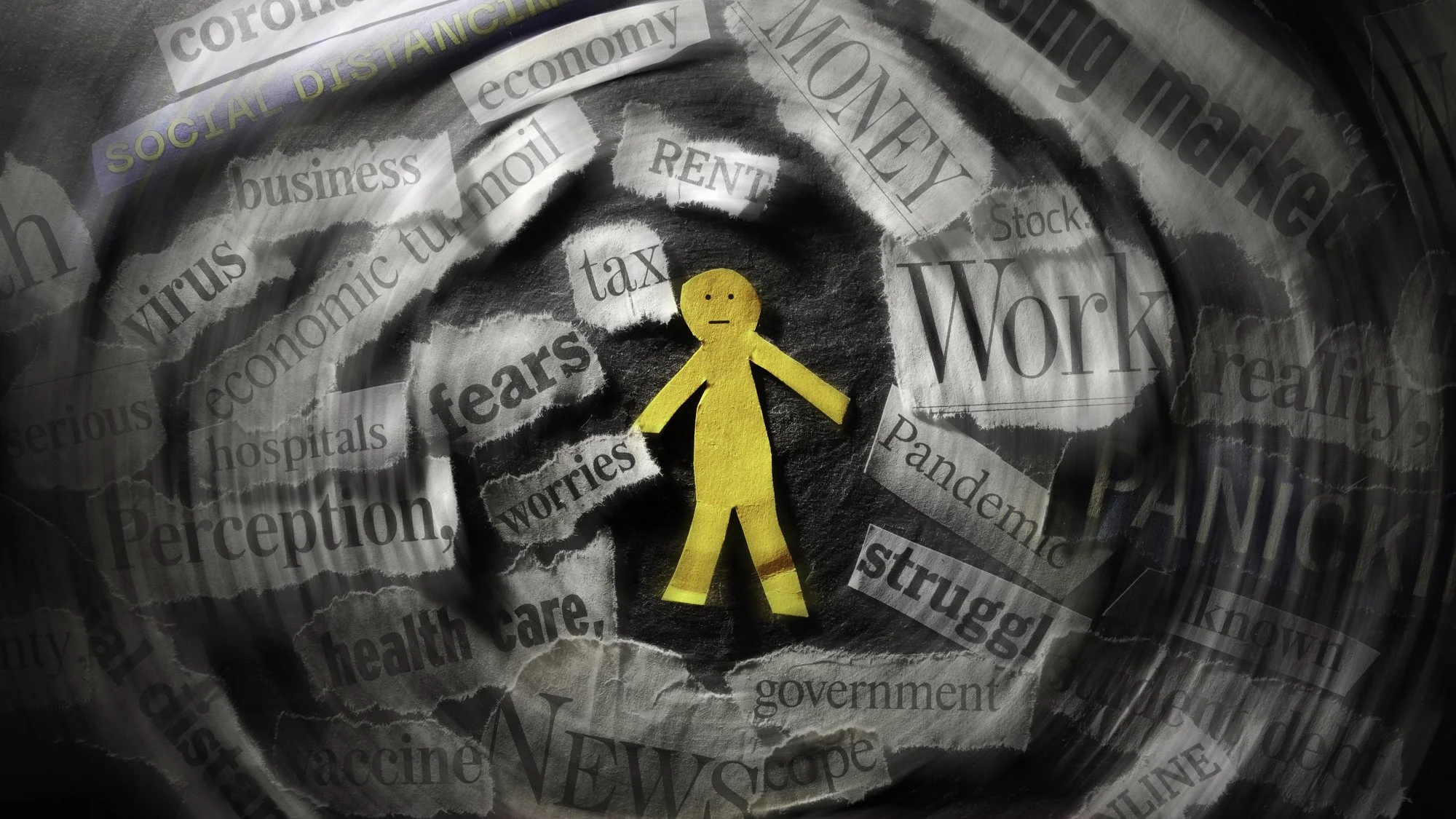
And yet, what is the hot topic (no pun intended), the lead story, the worry of the day? AI.
I understand the concern, and I want to be clear that much of it is earned. This fear isn't conjured from nothing. AI-linked layoffs crossed two hundred thousand this year, and more than half of the job cuts companies disclosed cited AI or automation by name.¹ And the loudest alarms are no longer coming from the sidelines; they are coming from inside the labs building these systems. This month, an Anthropic researcher resigned publicly, warning that the companies are "racing straight to self-improving superintelligence and gambling with our lives.”² Others, no less credentialed, put the odds of human extinction this decade at fifty percent or higher, figures that are fiercely contested but not coming from cranks.³ Some concerns about AI dovetail with the climate worries above; some are entirely new.
With climate change and AI, both potentially existential threats, only the speed of their approach and our ability to imagine their consequences differ. I say only, but there is one other real difference, and it's one worth acknowledging. We largely ignored climate change, even though we were aware that once it crossed its tipping points, we'd be unable to correct it and would have to live with its consequences. AI is the reverse. Its tipping point, if it has one at all, is still ahead of us; whether AI offers promise or peril remains uncertain. There is no doubt: both climate change and AI are of great consequence. The difference is in us — in which one we choose to pay attention to and fear.
Why do we ignore one and worry about the other?
For as long as I've been aware, the climate science has been all but unanimous about what was coming, and what it would cost us if we didn't change our ways.⁴ And the agreement has only hardened since. Near-total consensus, and we mostly looked away.⁵ AI is the mirror image. The evidence is newer, thinner, and genuinely contested — so contested that the people who build these systems can't agree among themselves whether we are years from ruin or on the verge of utopia. Real uncertainty, in other words, not comfortable ignorance. And yet it is the uncertain fear, not the certain one, that keeps so many up at night.
It's a paradox. Both climate change and AI are potentially existential threats. Yet, as a population, we ignored what science saw as obvious, and what has grown more visible every year. Meanwhile, everyone I speak with (young and old, including my eighty-four-year-old mother and her friends) fixates endlessly on an AI future even its architects can't agree on.
Why?
Not because the danger isn't real; some of it plainly is. But the danger alone doesn't explain the intensity, or why this fear grips us when the slower, surer one never did. The worry was never really proportional to the evidence. It was about us: whether we get to keep our lives as they are.
And I think there's a reason the two cut so differently. Climate implicated us. Taking it seriously meant admitting that the way we live is the cause, so looking away spared us the guilt, the cost, and the burden of change. AI implicates something outside us, a thing we built but can blame. It lets us feel the fear without the indictment.
So we gave climate our silence and now give AI our sleepless nights. Climate asked us to give something up, so we looked away. AI threatens to take something from us, so we can't look away. Opposite reactions, the same instinct underneath: protect what we know and have.
We didn't ignore one and fear the other because one is real and the other isn't. We did it because one asked us to change—and the other threatens to change us.
This brings me back to where I began: worry is a choice, not necessarily a conscious one, but a choice nonetheless. One often powered by our resistance to change. And we are now navigating an Intertidal Moment, a period where old methods and understanding are being swept away, and the new has not yet formed. Change swirls around us. Some of these changes, like AI, will happen quickly; others will unfold slowly but will be no less consequential.
So what should we do? Two things. First, meet the day and the future with wide-angle awareness: attention that takes in not just what's loud and urgent, but what's quiet and on the horizon. Our world is saturated with shiny objects, unrelenting notifications, and endless streams screaming for that attention, and the things that matter most rarely scream the loudest. Second, take responsibility, not as blame, but for what we notice and how we choose to respond: our words, thoughts, and actions. We didn't choose the change around us. But we can choose how we meet it.
The choices are: we can resist change and keep guarding the convenient and the familiar, or we can meet what's coming, both opportunity and challenge, with agency and curiosity instead of fear. Beneath it all, what we choose to notice, and what we let command our attention—that is the real choice and our true responsibility.
This essay is adapted from Rick Thomas's forthcoming book, Seeker's Mindset: Defining Identity and Purpose in an Age of Change.
Notes:
¹ Danica Macayan, "AI-linked layoffs hit 205,000 workers in 2026: report," Outsource Accelerator, Aug. 12, 2026, https://news.outsourceaccelerator.com/ai-layoffs-205000/; Jeffrey Teodoro, "More Than Half of Layoff Events Tracked in 2026 Cited AI or Automation, Report Says," International Business Times UK, Aug. 26, 2026, https://www.ibtimes.co.uk/ai-layoffs-2026-impact-1816503.
² Billy Perrigo, Harry Booth and Naomi Nix, "The AI Tipping Point," Time, Sept. 15, 2026, https://time.com/article/2026/09/15/ai-anthropic-researcher-quits-coxon-slowdown/.
³ Robert Booth, Dan Milmo and Aisha Down, "Could AI really wipe out humanity and hijack the internet?," The Guardian, Sept. 15, 2026, https://www.theguardian.com/technology/2026/sep/15/could-ai-really-wipe-out-humanity-and-hijack-the-internet.
⁴ John Cook et al., "Quantifying the Consensus on Anthropogenic Global Warming in the Scientific Literature," Environmental Research Letters, May 15, 2013, https://iopscience.iop.org/article/10.1088/1748-9326/8/2/024024.
⁵ Intergovernmental Panel on Climate Change, "Summary for Policymakers," in Climate Change 2023: Synthesis Report, 2023, https://www.ipcc.ch/report/ar6/syr/summary-for-policymakers/.