What? I Can't Hear You!
The Other Noise Pollution
“Who's your biggest competitor?”
“The noise.”
That's how I responded to a friend who is an expert in marketing. He was guiding me through the process of developing the Brand Map and Go-to-Market plan for my forthcoming book, Seeker's Mindset: Defining Identity and Purpose in an Age of Change.
While it was not the answer he expected, I could tell he knew exactly what I was referring to.
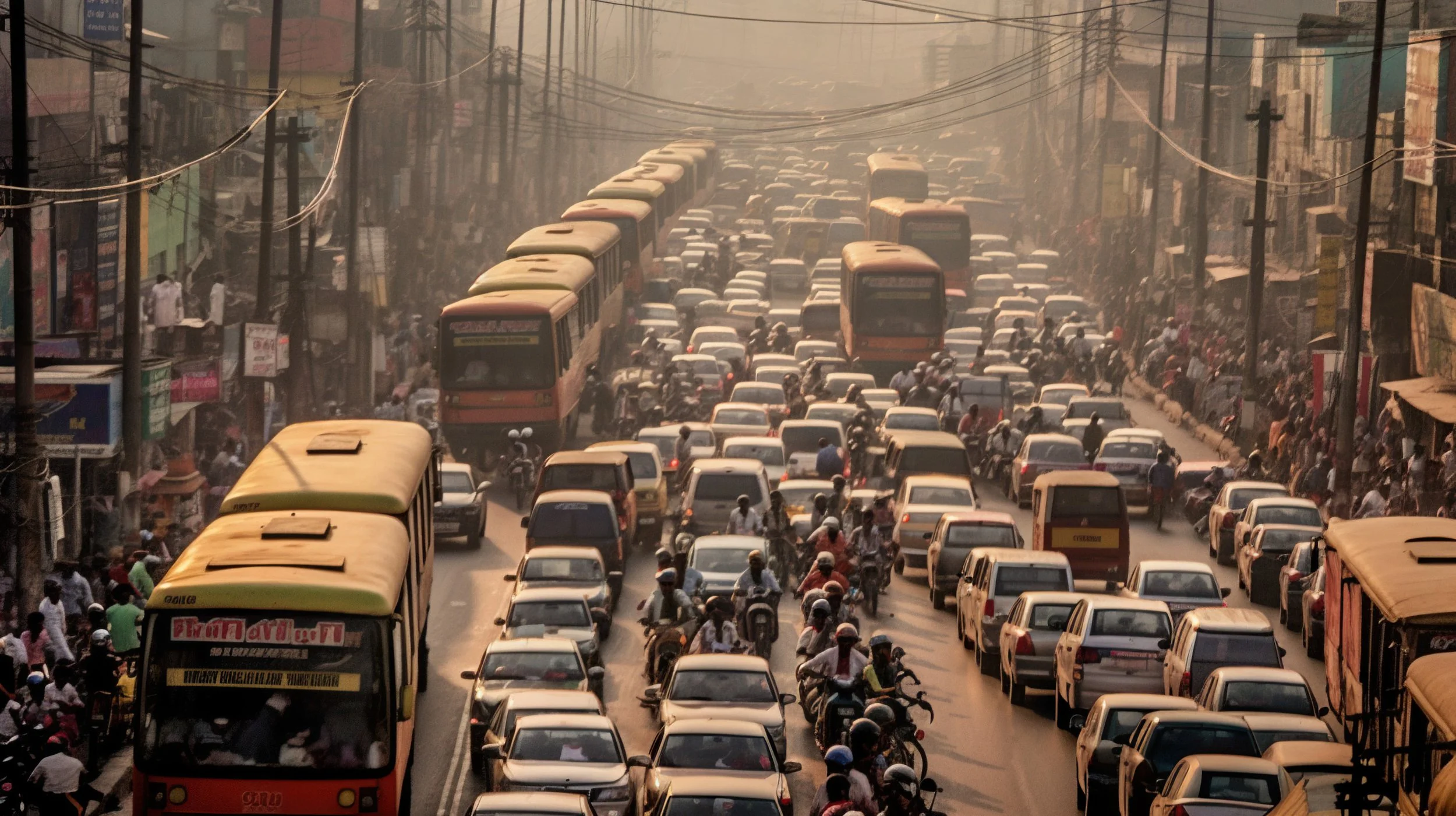
To understand what I meant, I have to take you back to a loud evening in Varanasi, India, in November 2025. I was out with a friend in an especially dense part of an especially dense city. My surroundings felt an order of magnitude more frantic, more chaotic, than any urban environment I have ever experienced. And yet amid this cacophony of sights and sounds, there was a young man strolling casually down the street, cellphone to his ear, having a relaxed conversation. I turned to my friend, who was from the area, and asked her, "How can he hear, let alone carry on a conversation, in this madness?"
She responded, "He's part of the scene."
In essence, she was saying a figure painted into a scene doesn't know they're in a painting. To them, it's just their world.
A New Noise
The concept of noise pollution has been around for a long time. We typically think of it as the noise in our environment: traffic, industrial activity and large crowds. It's even the annoying person who pierces our personal space with their phone's speaker in a public place. But today, there is a second type of noise pollution: mental noise, both sounds and sights. It's personal and targeted. It is the torrent of information and images that floods our environment and minds, even when we are alone. Especially when we are alone. They're delivered through our phones, watches and other smart devices as notifications, alerts, reminders, vibrations, chimes and flashes that call, and sometimes scream, for our attention.
I may have been like the man walking down the street in Varanasi, or the figure in the painting, and not noticed today's digital scene, except I had stepped away from social media for several years. It was only with the impending launch of Seeker's Mindset that I decided to step back into the current. When I did, it felt like that evening in Varanasi. A stream of individuals and ads all moving in different directions, all at once, and all in pursuit of the same thing: to be seen and heard. And yet, few, except for the high-profile or the persistently online, were noticeable above the din. I realized it left me feeling a bit low, but I couldn't say why.
Today, we hear about an epidemic of loneliness: people have stopped relating, even having sex. There's a lot of research being done on the topic and a lot of concern. But is it a surprise? People may be spending more time alone, but they're spending less time in the quiet of their own thoughts.
Think about it. How lonely does it feel to share a piece of yourself online and get no response from your friends and connections? Was it because they didn't care, or because they didn't see it? You never know, but the feeling is the same.
That evening in Varanasi, when I posed that question to my friend, she could relate and respond because we were both hearing and seeing the same thing, sharing the same experience. Our digital worlds are different: unique, customized and isolated. No one sees the same thing or shares the same experience. And while that experience may feel frantic, even chaotic, in reality, the scene we are witnessing is carefully choreographed to make it difficult to unplug.
By Design
Evidence of that engineered choreography is no longer in question. In March 2026, a California jury reached the first verdict of its kind, finding Meta and Google—the companies behind Instagram, Facebook, and YouTube—liable for building products that hooked and harmed young users.¹ Five months later, Meta settled a parallel case brought by a coalition of dozens of state attorneys general who had accused it of engineering its platforms to be addictive to children while concealing what it knew. The price was roughly $18 billion, along with a promise to alter the machine itself (but only in the US).² You do not dismantle a thing you built by accident.
Recent headlines have begun to refer to the social media industry as the "new tobacco companies." It's an acknowledgment that, while they are here to stay, they should be used with care, and with the knowledge that they are designed to be addictive and can be detrimental to your well-being.
It took me a while to figure out why the social media scene felt like a bit of a downer. The term "social" media is a paradox. In reality, our struggle to be heard and seen is not social at all. It's calculated and constructed. It's using the right words, videos, topics and frequency of engagement to climb to the top of an algorithm. It even comes with metadata to gauge your performance, sometimes in the form of Likes and Followers, other times as more detailed analytics.
Hearing Again
That's why social media engagement often feels so hollow, even mechanical. It's a performance. Not for our friends or connections, but for an algorithm. In order to be heard and seen, we have to be the something the platform expects us to be, not the someone we truly are.
But what about us, you and me? We're not kids. Do you think the intent of the social media platforms, or the intent of the curators of our broader digital environment, is any different? Of course not. So who's responsible for stepping out of the digital painting and noticing? We are.
In a world that won't shut up, "What? I can't hear you?" may be something we are saying to ourselves.
To hear ourselves again, we will need to summon the courage to step out of the scene, acknowledge the mechanical nature of our digital world, and reignite the awareness that will allow us to separate the meaningful from the noise. That is the Seeker's Mindset.
This essay is adapted from Rick Thomas's forthcoming book, Seeker's Mindset: Defining Identity and Purpose in an Age of Change.
Notes:
¹ Bobby Allyn, “Jury Finds Meta and Google negligent in social media harms trial,” NPR, March 25, 2026, https://www.npr.org/2026/03/25/nx-s1-5746125/meta-youtube-social-media-trial-verdict.
² Mekelburg, “Meta’s $18 Billion Social Media Settlement by the Numbers,” Bloomberg, August 26, 2026, https://www.bloomberg.com/news/articles/2026-08-26/meta-s-18-billion-social-media-settlement-by-the-numbers; Newley Purnell and Gian Volpicelli, “Meta’s Teen Safeguards on Facebook, Instagram Apply Only to US,” Bloomberg, August 27, 2026, https://www.bloomberg.com/news/articles/2026-08-27/meta-s-teen-safeguards-on-facebook-instagram-apply-only-to-us.